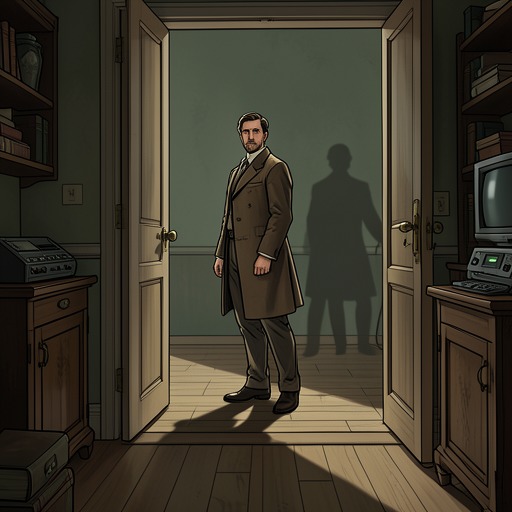
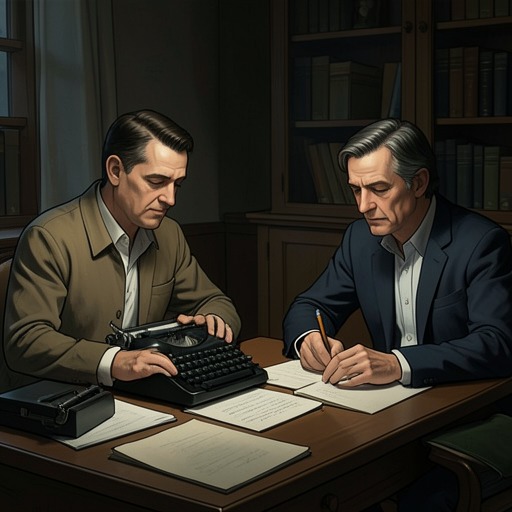
Words on paper made him, and words on paper are the only things that will get rid of him.
The Dark HalfThad Beaumont’s assertion that the same words that made George Stark can get rid of him gives the confrontation a stark, practical rule: Stark’s existence is tied to writing, so Thad turns to writing as the means of ending it. The line joins the novel’s conflict over authorship to its supernatural struggle, while leaving the outcome uncertain at the moment it is spoken.
The rule of written creation
Thad presents the words-on-paper principle as a direct relation between cause and remedy. Stark was made through writing, and Thad therefore argues that writing is not merely associated with Stark’s existence but is the only means capable of ending it. The statement makes the written page both origin and potential instrument of erasure.
Spoken during the confrontation
The remark comes as Thad addresses a woman and asks for quiet, placing the explanation within an immediate, tense exchange. He insists that no tricks or special effects are involved, then looks toward Stark and questions whether Stark himself understands that the plan could work. Thad’s answer is that Stark is only hoping, not acting from certainty.
Uncertainty and significance
The line declares a rule, but it does not certify that the rule will succeed. Thad’s confidence in writing as the necessary means contrasts with his suggestion that Stark is relying on hope. That gap between a stated principle and an unconfirmed result preserves the danger of the moment: the words offer a possible way out, not a guaranteed one. The expression concentrates the novel’s contest between writer and created figure into a single reciprocal proposition—writing made Stark, and writing may undo him.